


KUALA LUMPUR: As the 2025 Chair of ASEAN, Malaysia should leverage the regional bloc as a platform to resolve the prolonged crisis in Myanmar.
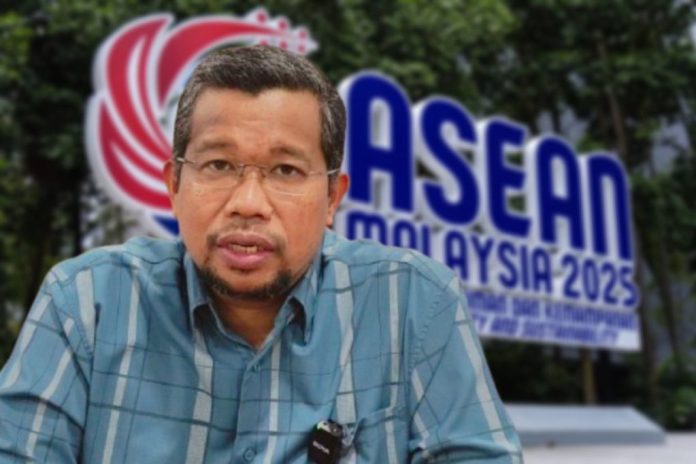
Member of Parliament for Sik, Ahmad Tarmizi Sulaiman, stated that the crisis has burdened not only the people of Myanmar but has also spilled over into other ASEAN member states, including Malaysia.


“The recently concluded ASEAN Summit is crucial in rallying the entire ASEAN delegation to seriously discuss how Myanmar should accept the proposals or measures that have already been emphasized by international parties, including ASEAN itself and the United Nations (UN),” he told Harakahdaily.
He stressed that ASEAN member states must issue a firm stance and urge the Myanmar military-led government to halt internal oppression and conflicts involving various ethnic groups, calling for an end to the violence.
“Although the ceasefire reportedly ended on May 31, that is not enough. ASEAN must push the junta to extend the ceasefire for a longer period.
“This is to bring all ethnic groups in Myanmar back to the negotiating table and end the conflict in the country, particularly for the most persecuted group, the Rohingya in the Rakhine state.
“For decades, they have been oppressed and displaced. Currently, in the Rakhine region, conflicts involving several groups, including the Arakan Army, are severely impacting the humanitarian situation of the Rohingya people,” he said.
Ahmad Tarmizi, who also serves as the Vice-Chairman of the All-Party Parliamentary Group Malaysia (APPGM) on Refugee Policy, asserted that ASEAN’s principle of non-interference in member states’ internal affairs is no longer relevant in this case.
“The idea of non-interference should not be interpreted as meaning we bear no responsibility for what is happening in other countries.
“The larger issue is that the Myanmar crisis has already caused hundreds of thousands of refugees to flee into Thailand, Malaysia, and Indonesia. So it is no longer a purely internal crisis for Myanmar.
“This has become an ASEAN problem, and ASEAN has the right to intervene—especially given the severe humanitarian implications. This is a matter of human rights, as enshrined in agreements by both ASEAN and the United Nations,” he stressed. – HARAKAHDAILY 3/6/2025