

PALESTINE – In the aftermath of the 45-day bombing of Gaza, the devastation remains hauntingly tangible.
Waseem Abedrabou, an eight-year-old boy, and his father Husam left their family home seeking refuge with Husam’s mother, Abeer.

Tragically, an Israeli airstrike struck the house they sought shelter in, obliterating the large home that housed five units of their extended family in the Nuseirat refugee camp.
Waseem’s uncle managed to retrieve the lifeless body of the young boy from the debris, but Husam remained buried beneath tons of heavy concrete.
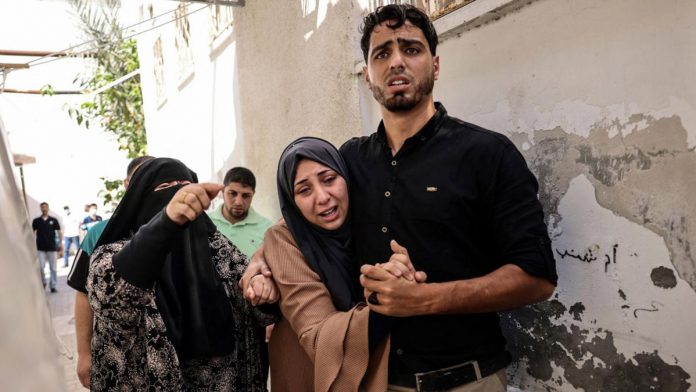
Abeer, Waseem’s mother, experienced the heart-wrenching agony of losing her son, yet she continues to grapple with the uncertainty surrounding her husband’s fate, as days of relentless digging have failed to locate him.
Describing Waseem as a child genius with a passion for Lego and computers, inspired by his father’s work as an electrical engineer, his aunt, Dina Safi, emphasized his achievements in chess and engineering competitions at school.
Waseem had even shared concerns with his mother about losing his trophies if their home in Gaza City was bombed.
The Palestinian health ministry reports that, in addition to the nearly 15,000 lives lost, including over 6,000 children, another 6,000 Palestinians are believed to be trapped under the rubble.
The recovery efforts face severe challenges due to the lack of fuel resulting from Israel’s blockade of Gaza.
Emergency services are hampered by limited access to affected areas, and communication blackouts further impede the reporting of airstrike sites.
Despite the truce initiated on Friday, following a deal involving the release of hostages by Hamas and the liberation of imprisoned Palestinian women and children by Israel, hopes for improved access to the worst-affected areas have not materialized.
Nebal Farsakh, spokesperson for the Palestinian Red Crescent Society, lamented the denial of access to many areas in Gaza City, hindering their ability to evacuate patients or search for individuals in demolished structures.
The aftermath of the conflict continues to unfold, marked by the anguish of families awaiting closure, the difficulties faced by rescue teams, and the broader challenges in the humanitarian response to the crisis.