



A captivating experiment involving a water-filled balloon and a butane lighter left Deziah Kingkade and her fellow students at Miami Edison Senior High School amazed during an outreach event at the University of Miami Miller School of Medicine.
The experiment aimed to illustrate a scientific fact: the world’s oceans, acting like an enormous sponge, absorb excessive heat from greenhouse gas emissions with minimal temperature increase.


Kingkade, who actively participated in the experiment, expressed her amazement, emphasizing the impact of hands-on experiences. The event, attended by 74 high school students, aimed to enhance their awareness of the environment and the implications of climate change.
Johnny Andrade, the students’ teacher and science coach, highlighted the effectiveness of witnessing scientific concepts in action, providing a deeper understanding than traditional classroom learning.
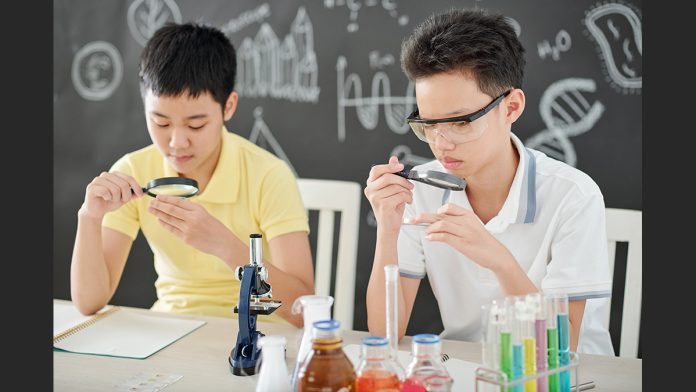
Throughout the day, students rotated through six hands-on demonstration stations, engaging in activities such as examining microorganisms from Miami waterways, creating plant-based plastic, and exploring the effects of CO₂ on temperature in a controlled setting.
The outreach event, organized by graduate students, also featured sessions on important topics, including measuring carcinogen exposure for firefighters and addressing ocean trash challenges.
Jessi Hersh, leading the graduate-student initiative, believes such experiences can be life-changing, recalling the impact of a similar outreach program during her high school years.
For Milanda Jean-Noel, the event reinforced her passion for science, particularly the climate change lab with the balloon experiment. As president of her high school’s science club, she plans to share her experience and encourage classmates to explore ways to protect the planet.
Mikese Lovett, inspired by the oceans, aspires to study environmental engineering at the University of Miami. The engaging activities during the event resonated with his career goals, emphasizing the interdisciplinary nature of environmental engineering.
The outreach event aligns with the organizers’ goal of providing opportunities for inner-city students from under-resourced neighborhoods. Supported by the University of Miami Racial Justice Grant, the initiative aims to expose students to the real-world applications of classroom learning.
“This was a chance for our high schoolers to see that everything we do in the classroom has a purpose,” noted Andrade, highlighting the event’s success in fostering a deeper exploration of science among the participating students.