


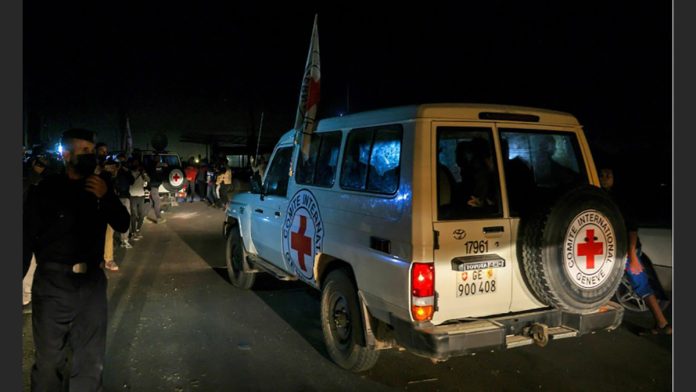

The Israeli government’s narrative surrounding the release of Palestinian prisoners during the temporary ceasefire has come under scrutiny for being perceived as insidious and dishonest.
Interior Minister Itamar Ben Gvir has issued a ban on Palestinians celebrating the release, asserting that expressions of joy amount to support for terrorism.


The government’s claim that the prisoners are all hardened terrorists who committed violent crimes rests on allegations made by a military that is widely criticized for its brutal occupation practices.
A list of names with alleged crimes has been released by Israel, and the accusations against the prisoners are taken at face value, even before any trial, emphasizing a narrative that convicts them by fiat in the court of public opinion.
The Netanyahu government and its supporters seem to be promoting a skewed version of events, one that fails to recognize the conditions under which Palestinians are tried and the severe limitations on their legal rights.
The list of 300 Palestinian prisoners proposed for release reveals that the majority are teenage boys, with 124 under the age of 18, including a 15-year-old girl.
Moreover, many of the 146 who are 18 years old turned so while in Israeli prisons.
According to the United Nations Convention on the Rights of the Child, these individuals were children when initially arrested by Israel.
Of the 300 names on the proposed release list, 233 have not been convicted of any crimes; they are simply categorized as “under arrest.”
This designation underscores the arbitrary nature of the accusations against them, leaving them in legal limbo without a fair trial.
The Israeli military court system, where Palestinians are tried, has long faced criticism for its lack of transparency, denial of access to legal representation, and the routine use of isolation as a form of punishment.
Palestinians are subjected to trials in military courts, denying them the fundamental right to due process.
The Israeli system lacks impartiality, and defendants often face difficulties in accessing purported evidence against them.
Israel’s claim to be the only democracy in the Middle East is undermined by the discriminatory legal treatment of Palestinians.
If the Israeli government contends that these individuals have committed violent crimes, particularly against civilians, it should provide them with full rights to due process, allowing them to see the alleged evidence and be tried in civilian courts with the same rights afforded to Israeli defendants.
The current narrative perpetuates the notion that these 300 people are all dangerous terrorists, yet Israel fails to establish a fair judicial process that adheres to international standards.
The international community is urged to consider the context of violence in the occupied West Bank, where Palestinians have lived under an apartheid regime for decades.
The Israeli government’s attempt to present the military court system as a fair and impartial legal process is challenged by widespread criticism from human rights organizations and institutions.
All nations should be judged by their treatment of the least powerful, emphasizing the need for a fair and just legal system that respects the rights of all individuals, regardless of their ethnicity or nationality.