



LONDON – Artificial intelligence (AI) could help the British National Health Service (NHS) overcome a radiologist “workforce crisis”, experts have said, although building trust in the technology is an important step in it becoming a normal part of a modern health service, reported German news agency (dpa).
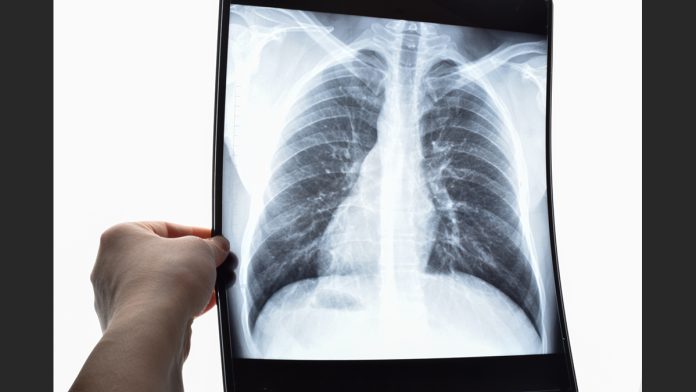
It comes after a pilot study in Surrey found AI had the power to categorise normal chest X-rays with a 99.7 per cent accuracy, showing potential to speed up cancer diagnoses.


Technology company Qure AI has developed its platforms to interpret the likes of X-rays, CT scans and ultrasounds to free up clinicians’ time.
Commercial vice president and UK and EU head of commercial, Darren Stephens, told the PA news agency: “We can’t recruit and onboard radiographers, radiologists and doctors at the same level that we need to meet the demand.”
Qure’s qXR platform is being trialled by Frimley Health NHS Foundation Trust to highlight the benefit of AI when it comes to differentiating between normal and abnormal chest X-rays.
The trust used 576 chest X-rays, with Qure’s AI platform able to identify normal scans with a 99.7 per cent accuracy rate.
Using the platform could save consultants up to two hours a day, researchers said, by allowing scans to be transferred to radiographers to read.
Dr Amrita Kumar, consultant radiologist and AI clinical lead at Frimley Health NHS Foundation Trust, said: “There’re increasing healthcare demands on the NHS, which have obviously been exacerbated by the pandemic.
“With this demand, a lot of the services require imaging support because the role imaging plays in diagnosis and management is quite pivotal.”
Dr Kumar added that a “workforce crisis” in radiology is also having a “very negative effect” on reporting timelines and causing backlogs in chest X-rays, as well as CT and MRI scanning.
“Chest X-ray is very important because it’s the first step in diagnosing lung cancer. We wanted to see candidates have better turnaround times so that we can not only diagnose the cancers faster, but also create that efficiency and productivity and save some time for our consultants as well.”
Elsewhere in the NHS, AI is currently being used to read mammograms and is helping doctors to diagnose strokes faster.
Last month, the National Institute for Health and Care Research (NIHR) published a collection of 10 studies exploring the application of AI in various parts of the health service.
These included detecting heart disease through “smart stethoscopes”, as well as using AI to predict disease progression and personalise cancer care.
Stephens said the UK is “leading the way” in terms of adopting the technology, but more must be done to educate people on its benefits.
“There’s a lot of myths associated with the technology and how it’s deployed because there’s a lot of fear out there around Chat GPT-like applications and language models.
“The version that is released to a hospital after it’s been tested doesn’t change beyond that release. It’s very much done in a safe and controlled way.”
He said the concept of AI “learning as it goes along doesn’t exist in our world”.
“It might with other AI applications in the more general consumer market, but not in the highly regulated medical side of things.”
Stephens hopes AI will become a normal part of the modern NHS in the coming years, but said continued education is important.
“In a previous life, I was involved in pre-analytical robotics in pathology. There’s a lot of similarities there – a robot that was going to sort blood samples in the lab was completely unheard of.
“Now, I would challenge you to find any laboratory in the country that doesn’t have a blood sciences pre-analytical robotic function. AI will become part of a modern delivery of service.”
Stephens also said training doctors in AI is “crucial” as it is “necessary for the successful implementation” of the technology.
He added: “It’s about trust, because if people aren’t going to trust and have comfort in using it, the technology will not be successful.”
Health Secretary Steve Barclay said using AI will “improve care for patients”.
Barclay added: “It is essential that we continue to make the most of this revolutionary tech, which is why this government is investing a further £21 million (US$27 million) for trusts to roll out AI imaging tools like Qure across the NHS.
“This is on top of the £123 million through our AI Awards, which Qure benefited from, to develop software to help radiologists prioritise the most urgent CT head scans for review.
“Access to technology like this can also help staff save valuable time, which is a key part of the NHS Long Term Workforce Plan.” – Bernama